

Educational information only. This page does not diagnose or treat any condition, and it makes no promises about results. Speak with a qualified professional about your own situation.
What the Pelvic Floor Actually Is
A layer of muscle at the base of the pelvis, roughly like a hammock stretched between the pubic bone and the tailbone. This page shows where it sits, how to find it, and how to tell whether a squeeze is landing in the right place.
The basics
Where the muscles sit and what they do
The pelvic floor is a layer of muscle that sits at the base of the pelvis, roughly like a hammock stretched between the pubic bone at the front and the tailbone at the back. It supports the bladder and the bowel and plays a role in controlling when you urinate or pass wind. It also works with the muscles of the abdomen and back during everyday movement, which is why a squeeze that ignores your breathing tends to feel wrong.
For men, the pelvic floor is often described in relation to two familiar sensations: stopping wind from the back passage, and interrupting the flow of urine. Both are useful as a way to notice the muscle. Neither is a good daily exercise.
The pelvic floor wraps around the openings of the bladder and bowel. When it contracts, those openings close slightly; when it relaxes, they open. That is the basic mechanism behind continence. The muscles also respond automatically when you cough, lift something, or stand up from a chair, tightening briefly to help maintain control. Voluntary Kegels train the same muscles you already use without thinking, which is why the movement can feel familiar once you find it.
The two standard cues, and how to use them honestly
Stopping wind from the back passage
This is the cleaner of the two cues. It does not interfere with normal function, and you can repeat it as often as you like. If you can hold a conversation while you do it, the effort is in the right place.
Interrupting urine mid-stream
This works as a one-time identification test, but it is not a training method. Doing it repeatedly during the day can leave the bladder not fully emptying, which is the opposite of helpful. Use it once or twice to confirm the sensation, then switch to the wind cue or a finger-based self-check.
Optional check
A finger-based self-check
Government health guidance describes a self-check that some men find more reliable than either of the sensation cues.
With a clean finger and a small amount of lubricant, you can feel the muscle tighten around the finger when you squeeze correctly. The check confirms that you are contracting the pelvic floor rather than the buttocks or abdomen. It is a one-off verification, not a routine, and it is entirely optional. If you are not comfortable with it, the wind cue is enough for most people.
What you are checking for is a small, even pressure around the finger that matches the lift you feel inside when you stop wind. If the pressure disappears the moment you breathe out, the hold is being carried by your breath rather than the muscle. If you feel nothing at all, that is a signal to slow down and try a smaller effort, not to squeeze harder.
Signs you are squeezing the right muscles
A correct squeeze feels like a small internal lift, close to the base of the penis and around the back passage. The buttocks stay soft, the thighs stay quiet, and your stomach does not pull in. You can hold a conversation. If you are holding your breath or your jaw is tight, the effort has drifted into the wrong pattern. One clean squeeze with normal breathing is worth ten strained ones.
Buttocks
Soft and quiet. If the cheeks tighten, you have recruited a neighbouring muscle group instead of the pelvic floor.
Breathing
Slow and normal. Holding your breath usually means the abdomen has taken over the effort.
Sensation
A small lift near the base, not a full clench. Smaller and cleaner beats bigger and strained.
Signs you are squeezing the wrong muscles
The most common mistake is clenching the buttocks. The second is pulling the stomach in, which many men do automatically when they hear the word "squeeze". A third is gripping the thighs together.
If any of these happen, stop, take a normal breath out, and try again with less force. Muscle isolation is easier when the effort is smaller, not larger. Precision comes before strength in this kind of training. A short pause between attempts does more for your technique than adding repetitions to a squeeze you are not sure about.
Lying down, sitting, standing
Position changes the difficulty. Most beginners move through the three in order over the first few weeks, adding the harder one only once the easier one feels reliable.
Once the squeeze is reliable standing up, you can practise it in ordinary situations — waiting for a lift, sitting at a desk, standing in a queue. There is no need to announce it or set aside a special block of time.
How often to check your technique
Recheck your technique every week or two, especially if you have increased the number of repetitions. It is common for form to drift once a routine feels easy. A quick reset: lie down, place one hand on a buttock, breathe out gently, and do three slow squeezes. If the hand feels nothing, the technique is still clean. If the buttock tightens, drop the effort and try again.
Treat this as maintenance, not a test you can fail. A two-minute check once a fortnight keeps the habit honest without turning it into another thing to worry about.
Common confusion with "core" exercises
Planks, sit-ups, and most gym core work use the abdominal muscles, not the pelvic floor. They are not a substitute for Kegels, and heavy abdominal bracing can be uncomfortable if the pelvic floor is already sensitive. That does not make core training bad, only different. If you do both, keep the Kegel practice separate and calm, and avoid holding your breath during abdominal work.
Pelvic floor work: small, quiet, breath-led squeezes with soft buttocks and a relaxed jaw.
Core training: larger abdominal effort, often with a braced breath — useful on its own terms, but a different job.
What to do if you feel nothing at all
Some men cannot feel the muscle on the first few attempts. That is not unusual. Try lying down with a pillow under the knees, breathe out slowly, and imagine stopping wind. Give it a few calm attempts on different days before you decide anything about your technique.
If nothing happens after several honest attempts, or if you have pain in the area, a pelvic health physiotherapist can assess the muscles directly. This is a normal reason to book an appointment, not an overreaction.
Check when to see a professional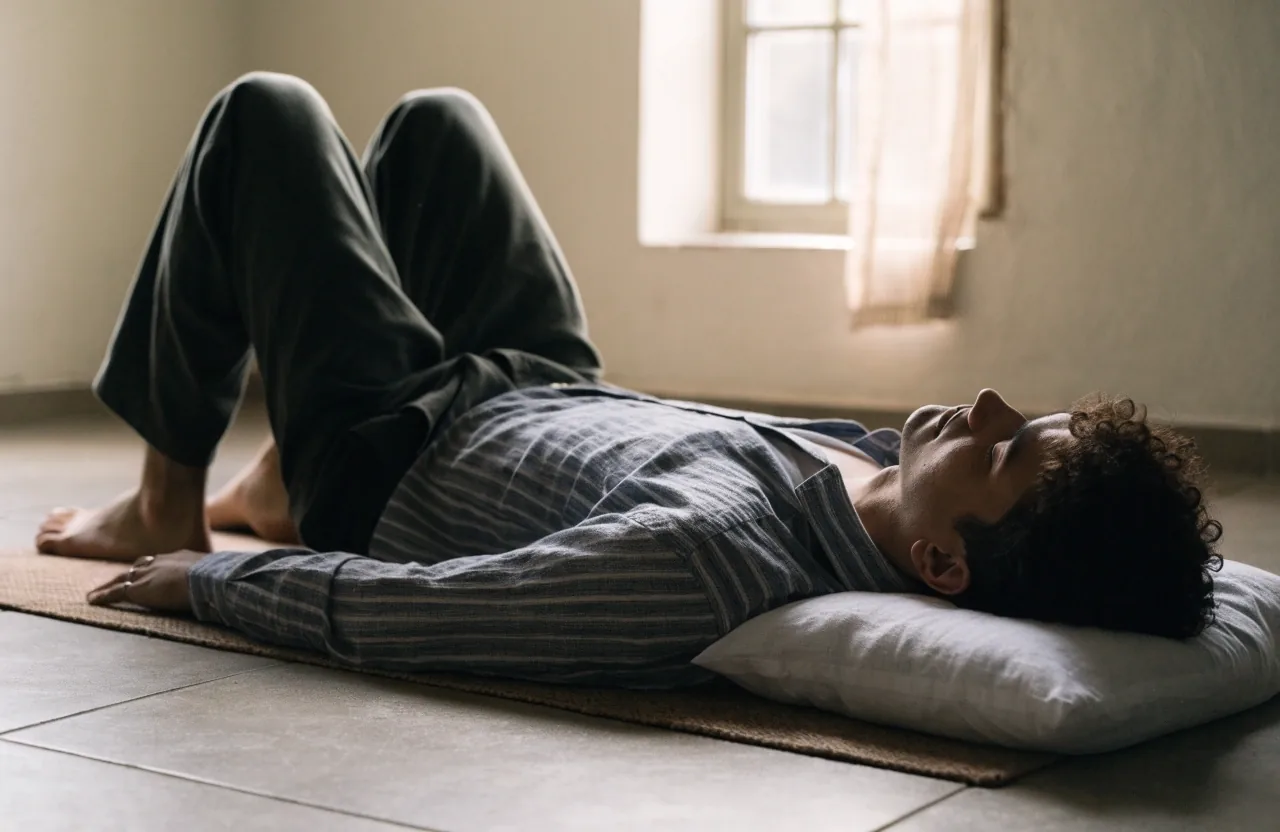
Questions men ask about finding the muscle
Should I stop urine mid-stream to practise?
Use it once or twice to learn the sensation, then stop. Doing it repeatedly during the day can leave the bladder not fully emptying. The wind cue is the one to keep.
How hard should the squeeze be?
Lighter than you expect. A small internal lift with normal breathing is the target. If your jaw tightens or you hold your breath, the effort is too high.
Can I do these in public without anyone noticing?
Yes. A clean squeeze is invisible from the outside, because the buttocks and thighs stay quiet. That is also the easiest way to tell it is being done correctly.
Is it a problem if I cannot feel anything yet?
Not on the first few tries. Lie down with a pillow under the knees, breathe out slowly, and imagine stopping wind. If several honest attempts come to nothing, or if there is pain, ask a pelvic health physiotherapist to assess the muscles directly.
Where to go next